
Every document carries an audit trail, and the person who sent it can read it. Since that is the whole point of a signature that holds up, it is worth knowing what is in it.
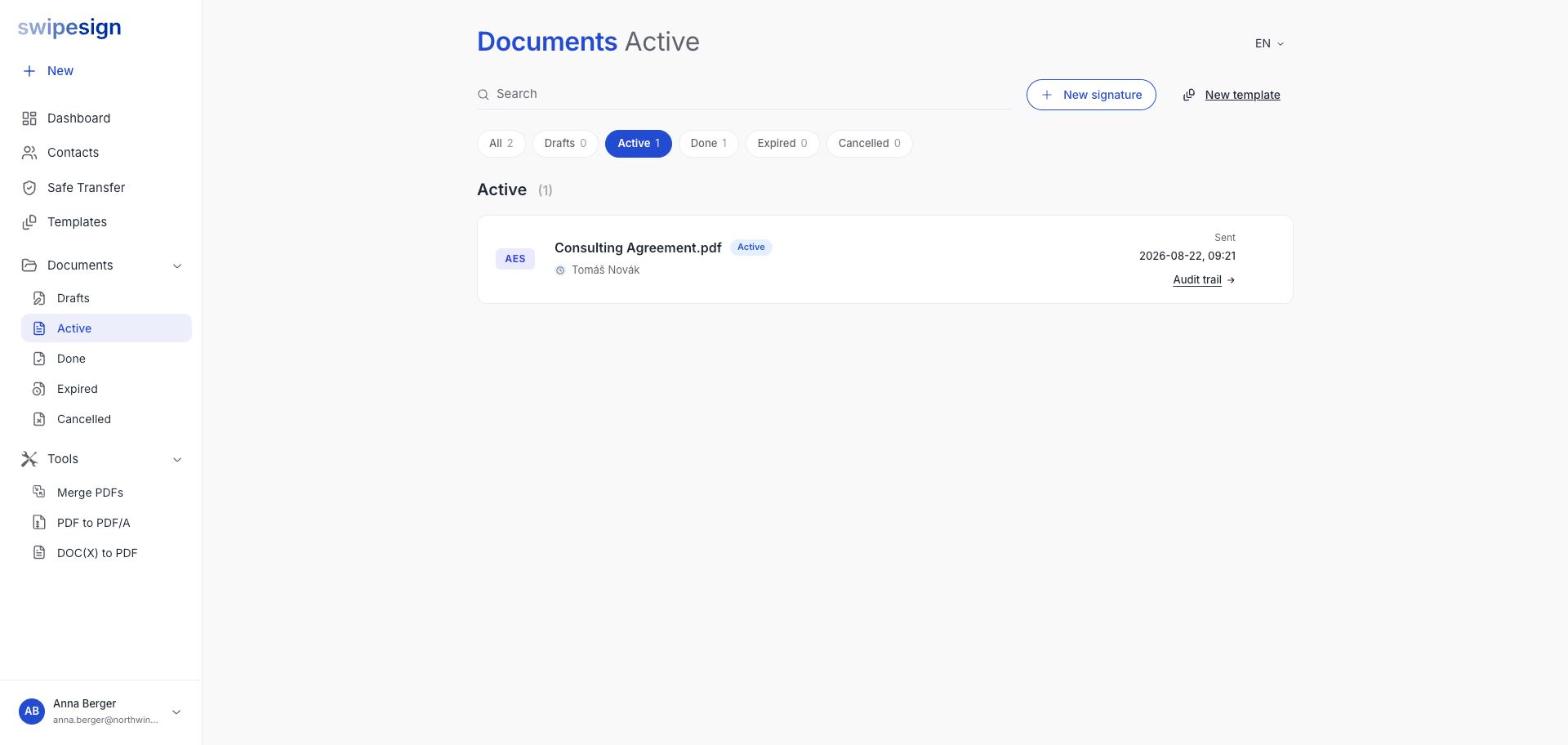
What is recorded
| Event | What the sender sees |
|---|---|
| You opened the document | That you viewed it, and when: every time, not just the first |
| You started signing | The timestamp when the signature process began |
| You finished | The timestamp when the signature completed |
| You stopped part-way through | That a signature was started and not finished, not why |
Times are recorded in UTC, so the record reads the same wherever anyone is.
What the sender does not see
- Your ID document. The identity check happens at a trust service provider. No images of your passport or ID card reach swipesign, let alone the sender.
- How long you spent reading, or which parts you looked at. Only that you opened it.
- Anything you did elsewhere. The trail covers this document and nothing else.
See What swipesign can and cannot see of your ID.
What ends up in the signed document
Your name appears on the signature block, along with a signer ID and the date. On an Advanced signature the block also shows your email address and phone number in full; on a Qualified one the email is masked.
Why it works this way
A signature nobody can evidence is worth very little. The trail is what lets the sender show the document reached you, that you opened it, and that you signed it, and it is equally what protects you if somebody later claims you signed something you did not. See What is in the audit trail.