
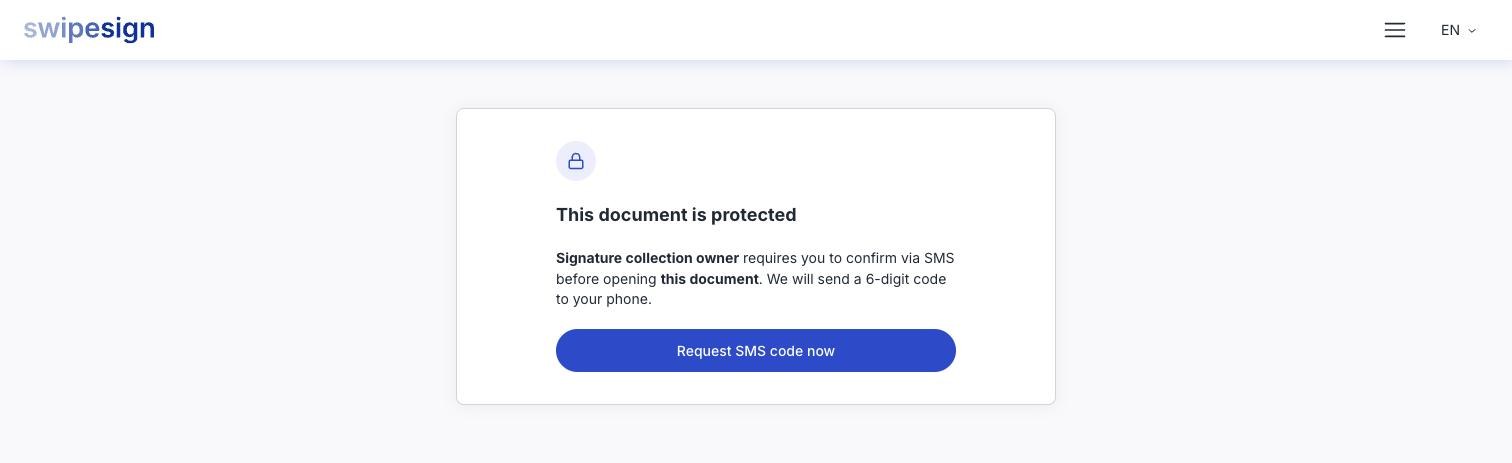
Some documents do not open straight from the link. Instead you get a screen headed This document is protected, asking you to confirm who you are before anything is shown to you.
That means the sender switched on protected access when they set the workflow up. Without it, anyone who got hold of the link could read the document. With it, only the person the link was meant for can.
Which challenge you get
You do not choose, and neither does the sender. swipesign asks for whichever factor it can already tie to you:
| If you are… | You are asked for |
|---|---|
| A guest: no swipesign account | A 6-digit code texted to the phone number the sender put on your card |
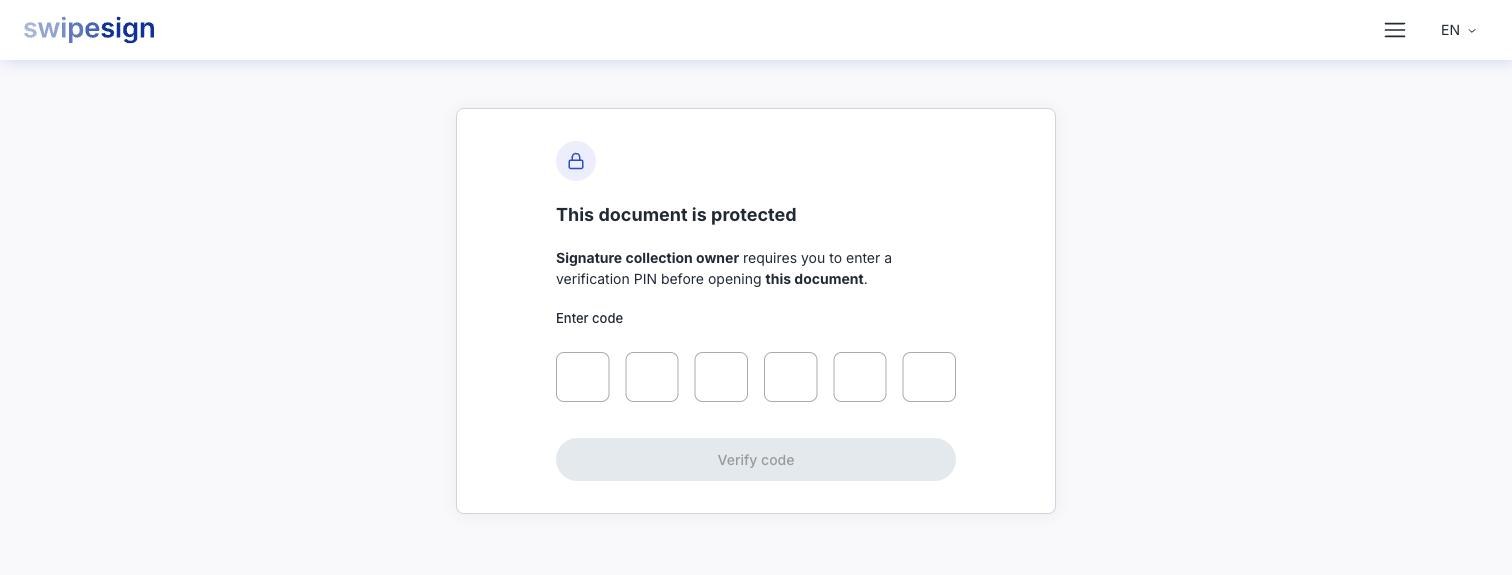
| A swipesign user who signs in with ID Austria | A 6-digit verification PIN, sent to you by text |
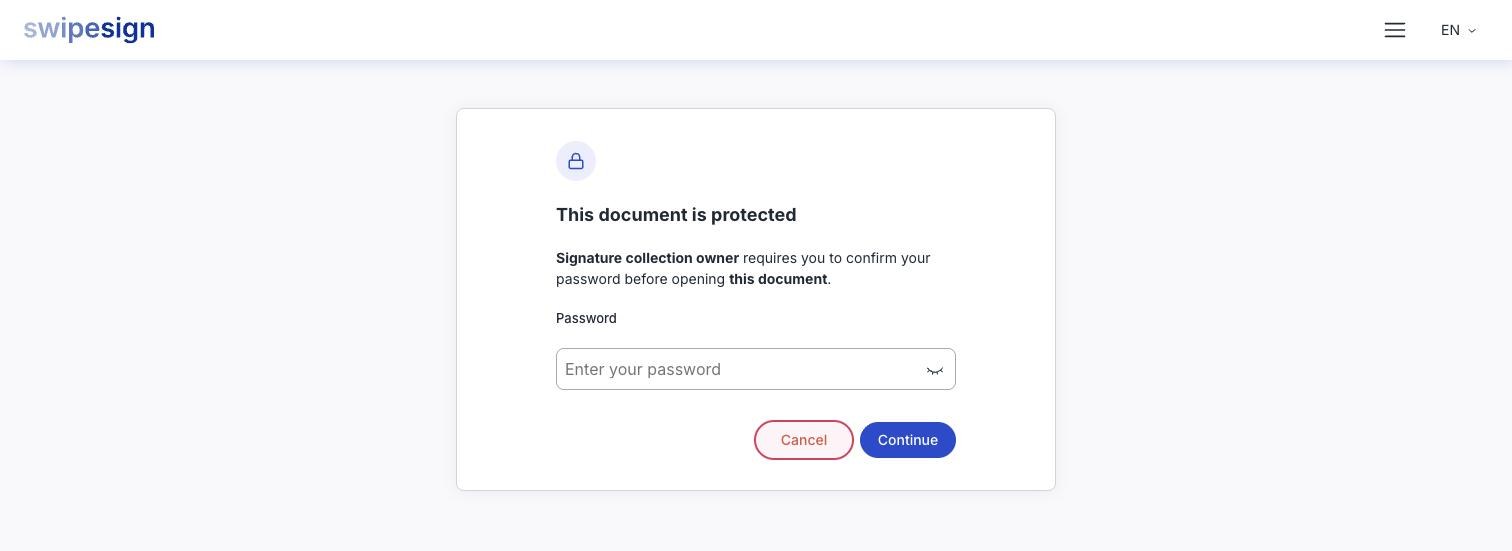
| A swipesign user who signs in with a password | Your own swipesign password |
The code by text
Nothing is sent until you ask for it. Click Request SMS code now and the message goes to the number the sender holds for you. Type the six digits and you are in.
A short counter runs before Resend code becomes available, so a second tap does not fire off another message immediately. Request several codes in a row and a help note appears telling you to contact the sender: the right move, because only they can correct the number on file.
If you have a swipesign account
When the address the document was sent to is also a swipesign account, you are asked to sign in before anything else. That is deliberate: the account is the stronger claim to that address, so it takes precedence over the emailed link.
Sign in first and open the link again. If you signed in only moments ago, the password screen is skipped altogether: you have just proved the same thing it would have asked for.
This is not the signing step
Unlocking only opens the document. Reading it commits you to nothing. Signing comes later, after you have swiped, and identifies you separately: see You have been asked to sign.
So a document that opens with a text message may still ask for a text message again on the way out. The first proves you are the right recipient; the second is part of the signature itself.